When the Climate Changes,Everyday Life Changes
N&T | INSIGHTS
CLIMATE • PEOPLE • FINANCE
When the Climate Changes,
Everyday Life Changes
How heat, flooding and nature loss travel through homes, jobs, household budgets and small businesses
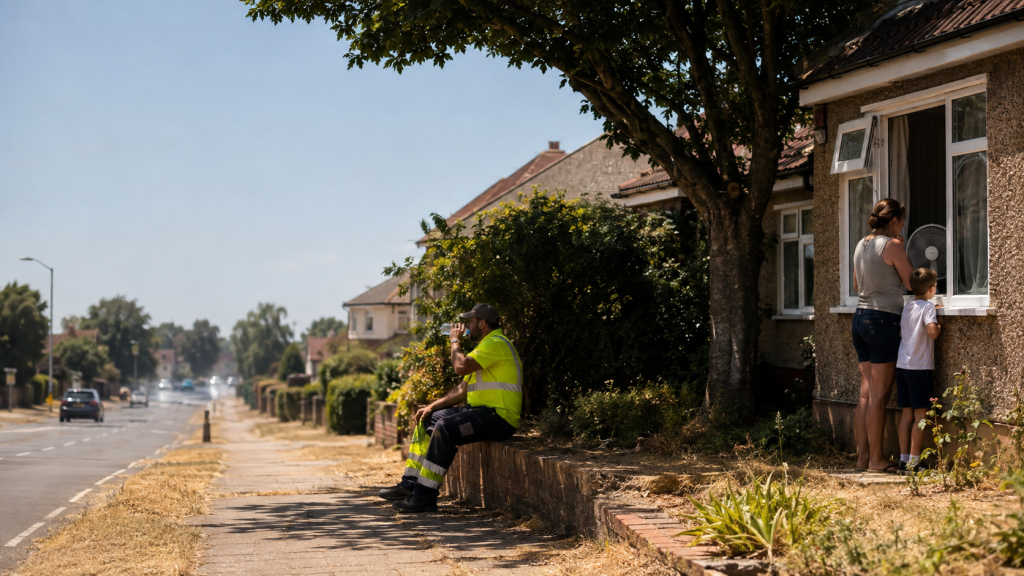
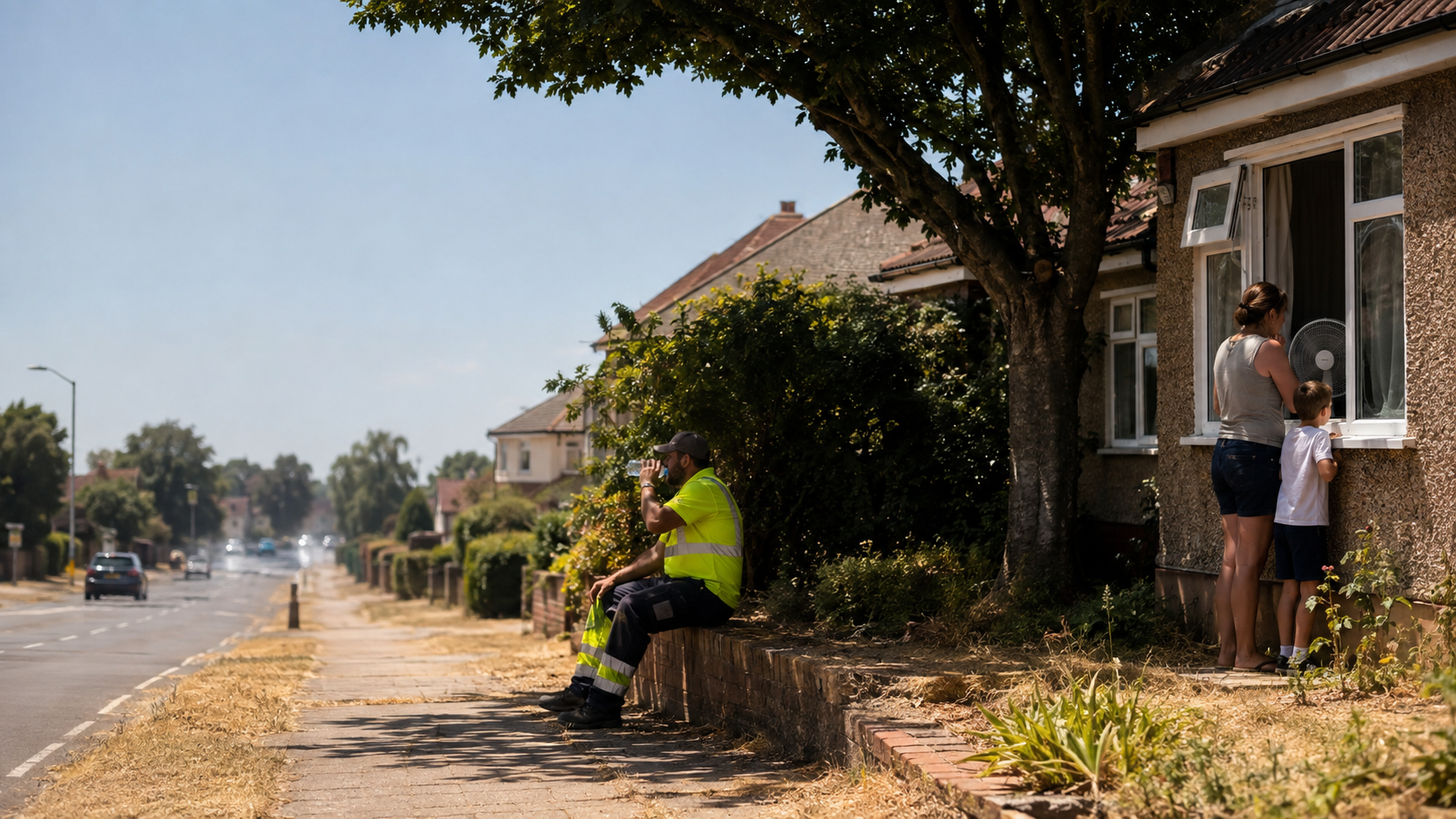
A fictional Watford heatwave illustrates how one climate event can affect health, work, education and household costs at the same time. AI-generated editorial image.
Climate change is often described using global temperatures, carbon emissions and net-zero targets. But its most important consequences are felt much closer to home: in a bedroom that will not cool down, a shift cut short by unsafe heat, a shop closed after flooding, or a weekly food bill pushed higher by a poor harvest.
THE CENTRAL IDEA Climate change is not only an environmental issue. It is also a human, social and financial issue—and the effects are often connected.
From environmental risk to human impact
The Climate & Nature-related Report 2025 distinguishes between two forms of physical climate risk:
Acute risks — sudden events such as floods, cyclones, wildfires and droughts.
Chronic risks — longer-term shifts such as rising temperatures, reduced working capacity and increased demand for cooling.
Both can damage buildings, equipment and stock. Just as importantly, they can reduce productivity, interrupt operations, weaken revenue and create uncertainty for workers. Behind every financial loss are people whose routines, security and wellbeing may be disrupted.
A Watford heatwave: one event, many consequences
Imagine a family living in Watford during a prolonged summer heatwave. One parent works outdoors and has to finish early when the afternoon temperature becomes unsafe. The family immediately loses part of its weekly income.
Their home retains heat into the evening. Their child struggles to sleep and arrives at school tired. Fans run throughout the day, increasing electricity use. Food spoils more quickly, while some grocery prices rise because farms, warehouses and transport networks are also dealing with extreme weather.
No single dramatic disaster has occurred. Yet the heatwave has already affected five parts of the family’s life:
Health and comfort
Employment and income
Energy expenditure
Food costs
Education and wellbeing
WHY THIS MATTERS Climate risks rarely stay in one category. They can move rapidly from weather to health, from health to work, and from work to household finances.
Health and wellbeing
Extreme temperatures can increase the risk of heat exhaustion, dehydration and other health problems. Older people, babies, outdoor workers and people with existing medical conditions may be especially vulnerable.
Flooding creates a different chain of pressure. Families may need to leave their homes temporarily, replace damaged belongings and navigate repairs or insurance claims. The uncertainty, disruption and fear of another event can also have longer-term effects on emotional wellbeing.
Climate resilience must therefore mean more than protecting property. It must also protect people’s physical health, mental health and ability to recover.
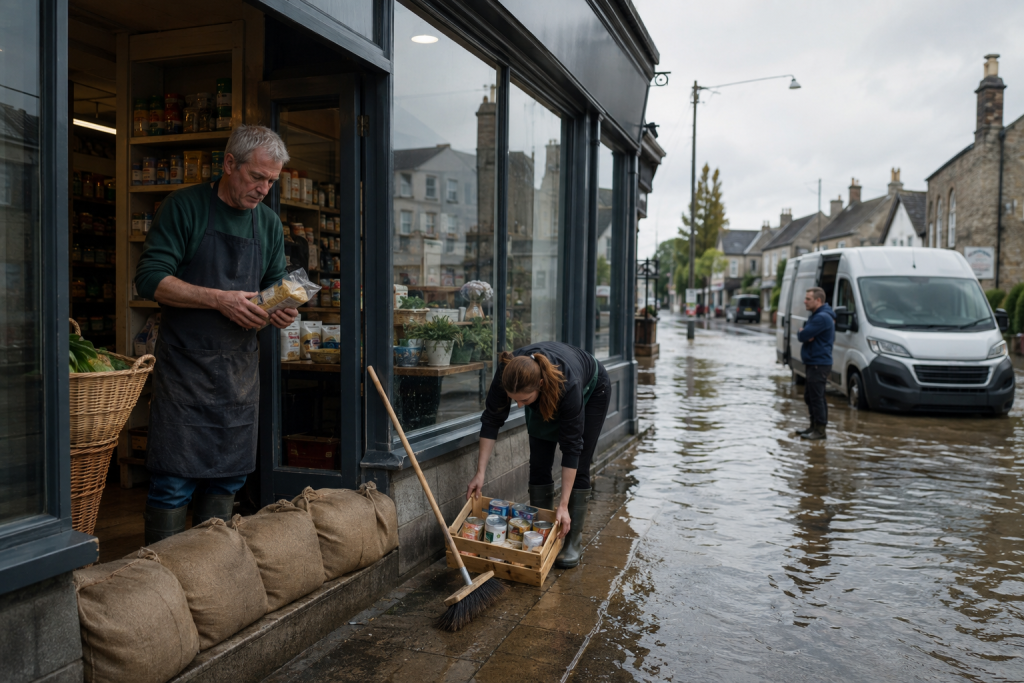
For a small business, even shallow flooding can damage stock, delay deliveries, interrupt cash flow and increase recovery costs. AI-generated editorial image.
Employment and household finances
Climate change can squeeze a household from both directions: income may fall at the same time as essential costs rise. Outdoor work may become unsafe during extreme heat. Flooding may block travel or force workplaces to close. Drought and water restrictions can disrupt agriculture, manufacturing and other water-dependent activities.
Meanwhile, affected households may face:
Higher energy bills
Property-repair costs
Higher insurance premiums
Rising food prices
Travel disruption
Lost working hours
Families with limited savings have less capacity to absorb these shocks. Climate change can therefore deepen existing social and financial inequality, even when two households experience the same weather event.
Nature supports people—and the economy
Natural capital includes resources such as air, water, soil, plants, animals and minerals that provide value to people, communities and the economy. These systems are not separate from economic activity; they make it possible.
Agriculture depends on healthy soil, water, biodiversity and stable weather. Communities depend on clean air and reliable water. Businesses rely on natural resources throughout their operations and supply chains.
When ecosystems deteriorate, the services they provide become less reliable or more expensive. Water scarcity can interrupt production. Soil degradation can reduce agricultural output. Biodiversity loss can weaken the resilience of food systems. Protecting nature is therefore an investment in human and economic security.
How climate risk reaches a business
Direct damage — floods, fires or storms may damage premises, equipment and stock.
Operational disruption — extreme weather can interrupt transport, electricity, water supplies and staff attendance.
Supply-chain pressure — suppliers may experience shortages, delays or higher costs.
Reduced productivity — extreme heat can make some tasks slower, difficult or unsafe.
Financial consequences — lower revenue and higher operating costs can weaken cash flow and creditworthiness.
A business that looks only at its direct emissions may therefore miss significant risks affecting its employees, customers, suppliers and local community.
Why sustainable finance matters
Sustainable finance can direct capital towards activities that reduce environmental harm, strengthen resilience and support a fair transition. Examples include:
Energy-efficient buildings
Renewable energy
Flood protection and improved drainage
Water-efficient technology
Sustainable agriculture
Low-carbon transport
Circular-economy projects
Climate-resilient infrastructure
The environmental label alone is not enough. A credible sustainable-finance project should create measurable benefits and manage potential risks to people, communities and nature.
A practical starting point for SMEs
Climate planning is not reserved for banks and multinational companies. A small or medium-sized business can begin with eight practical actions:
Map exposure. Identify vulnerability to heat, flooding, water shortages and supply-chain disruption.
Estimate the cost. Consider lost sales, downtime, repairs, replacement stock and higher operating expenses.
Prepare continuity plans. Decide how the business will protect staff, communicate and keep critical services running.
Track resources. Monitor energy, fuel, water and waste consistently.
Engage suppliers. Discuss environmental risks with the partners on whom the business depends most.
Protect workers. Adapt working hours, rest periods and workplace conditions during extreme weather.
Review financial buffers. Check insurance cover and emergency cash reserves.
Measure progress. Set realistic environmental objectives and review them regularly.
A USEFUL FIRST STEP Even a basic climate-risk assessment can improve budgeting, investment decisions and readiness for disruption.
The role of N&T
At N&T AI-Powered Sustainable Finance and Accounting Ltd., we believe climate information becomes valuable when it supports practical decisions.
Accounting data can reveal changes in energy expenditure, resource use, operational costs and potential climate-related financial exposure. Technology can support the collection and analysis of this information, while sustainable-finance principles can guide responsible planning and investment.
Our aim is to help businesses connect three areas that are too often treated separately:
Financial performance
Environmental responsibility
Social impact
A sustainable transition should protect the planet while also supporting employees, customers, households and local communities.
The bigger picture
Climate change is not only changing the weather. It is changing the cost of living, working conditions, health risks, business operations and the security of communities.
The effects may begin with a heatwave, flood or drought, but they can travel through homes, workplaces, supply chains and financial systems. Businesses that understand these connections will be better prepared to manage risk and contribute to a fairer transition.
By placing people at the centre of climate action, sustainable finance can help build an economy that is not only lower-carbon, but also more resilient and inclusive.
Published by N&T AI-Powered Sustainable Finance and Accounting Ltd.
N&T AI-Powered Sustainable Finance and Accounting Ltd. •